
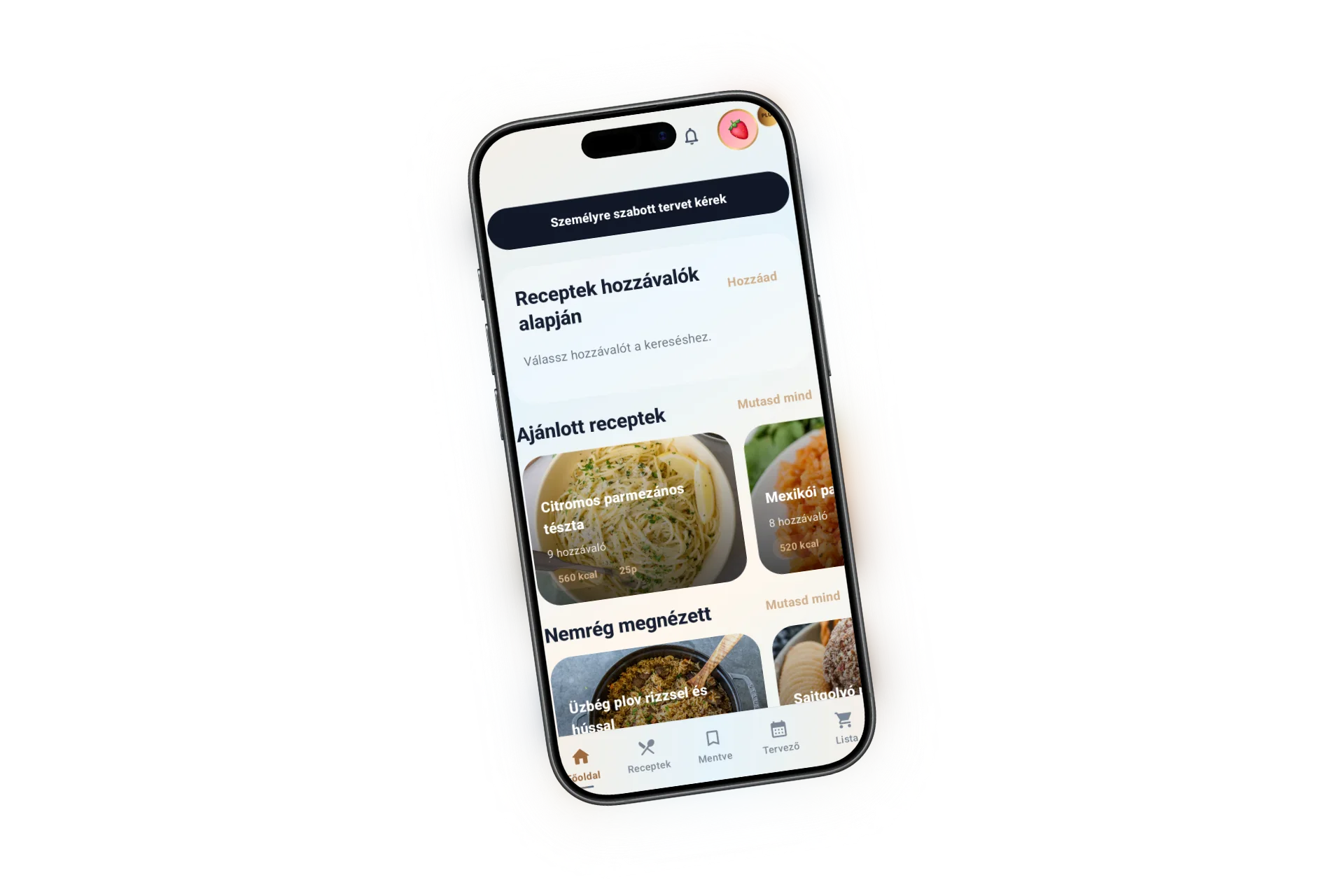


We develop the app you've been dreaming of

We provide a complete app development service for SMEs and larger organisations alike.

We help turn your idea into a polished, stable mobile application that works reliably.

Android, iOS and cross-platform app development

A mobile application is no longer an optional extra; it is a competitive advantage. A well-designed app makes everyday work simpler, brings a business closer to its customers and provides a level of convenience that a traditional website cannot deliver on its own.

Every project is built around individual requirements. We align the application's operation, structure and features with business goals rather than forcing them into a pre-built template. Whether the need is customer management, booking, internal administration or a completely unique workflow, the result is a fast, stable system that can be extended over the long term.

We develop applications for Android, iPhone or both platforms. The technology is selected according to the project's size, objectives and budget, keeping development both effective and cost-efficient.

Our work does not end when development is complete. From testing and publishing to the app stores through to later extensions, we support every important step so the finished application genuinely contributes to the growth of the business.

How we can help

What types of apps can we build for you?

We create custom mobile applications for a wide range of purposes, from business and internal corporate systems to healthcare, e-commerce, education, insurance, guest management and fitness applications.

Every project involves different workflows and user needs, so development is never based on ready-made templates. The application's structure, features and appearance are always tailored to the relevant industry and business objective.

We are also happy to take on ideas for which no established solution yet exists. The goal is to create a usable, stable and extendable application that is not merely completed, but becomes a genuine part of everyday operations.

E-commerce app development
Healthcare app development
Insurance app development
Fitness app development
Educational app development
Guest management app development
Analytics app development
Community app development
Agricultural app development
Employment marketplace app development
Marketing app development
VR app development

Custom development

Why invest in a custom app?

The greatest advantage of custom app development is that the product does not have to fit within the limits of a ready-made template. Features, user journeys and background processes can be shaped precisely around the way the business or product needs to operate. This is especially important when the application must work with existing systems, exchange data or gain new modules over time. A well-structured custom app is faster, more reliable and far easier to develop in the long term than a solution built around compromises.

App Store / PlayReady for your idea to take its place here.
Custom features
Efficient user journeys
Stable operation
Flexible integrations
Scalable growth
Sustainable long-term

How we work together

The app development process

01 Product planning

Software specification

Precisely defining the functional, business and technical requirements

At the beginning of the project, we define the application's purpose, core features, target users and business model in detail. We also document the required integrations, data-management needs and the technical conditions on which later development will be based.

Planning is not limited to the current concept. We review potential development directions, technical constraints, business opportunities and the metrics that can later be used to measure the application's performance.

02 Product planning

UI/UX design

A clear, modern and easy-to-use interface across every screen size

The first design step is creating a wireframe that shows the application's structure, the relationship between screens, the navigation and the most important user journeys.

The detailed visual design is built on this foundation, including colours, typography, icons and other graphical elements. The goal is not merely to create an attractive interface, but to design an experience that is logical, immediately understandable and easy to use without additional explanation.

03 Product planning

Software architecture design

Stable and extendable technical foundations for the long term

The structure of the backend fundamentally determines the application's speed, security and future extendability. During planning, we establish the foundations for data management, permissions, integrations and server-side operation.

We design an architecture that can support not only the initial user and data traffic, but also the greater load that comes with growth. Availability, fault tolerance and data security are already key considerations at this stage.

04 Product planning

Development roadmap

Finalising, prioritising and scheduling the features

At the end of the planning phase, we decide which features belong in the first version, which will be developed later and the most effective order in which to proceed.

Larger projects are divided into smaller, clearly traceable stages. Each stage ends with a demonstrable and testable version, keeping progress visible and allowing necessary changes to be incorporated at the right time.

05 Development

Mobile application development

Building the application, backend and administration interface

In this phase, the approved designs and features are turned into a working system. Development follows the agreed roadmap and is divided into smaller, verifiable milestones.

The work may involve more than the mobile application itself. Depending on the project, it can also include a dedicated backend, database, API connections and a browser-based administration interface.

06 Development

Testing

Verifying operation, usability and security

Testing does not begin at the very end of the project. Completed features are checked throughout every development stage, and identified issues are resolved before the next milestone.

Before launch, we carry out comprehensive system testing. We verify the main user journeys, data entry, permissions, integrations, performance, different screen sizes and security-related behaviour.

07 Development

Launch

Publishing and configuring the production environment and administration interface

Before launch, we establish a separate, stable production environment dedicated exclusively to real users and live data. We configure the backend, database and production version of the administration interface.

We then prepare the application for publication in accordance with App Store and Google Play requirements. Before submission, every necessary technical, content and permission requirement is checked.

08 Support

Further development

New features and changes based on future needs

A mobile application continues to evolve after launch. New features may become necessary, business processes may change and user feedback may justify smaller or larger adjustments.

For this reason, the system is structured from the outset so it can be developed safely later. Extensions are planned and implemented while preserving the application's stable operation.

09 Maintenance

Operation

Stable operation, regular monitoring and resource optimisation

Operating the application does not end with publication. The live system requires continuous attention, including monitoring errors, server operation, performance, storage usage and security updates.

Regular maintenance helps prevent outages, preserve application performance and address changes caused by operating systems, external services or growing user traffic in good time.

Questions and answers

Mobile App Development FAQ

Clear answers to the most common questions

The decision is primarily determined by how the service works and the situation in which it will be used. A mobile application may be justified when regular use, push notifications, offline operation, the camera, location services or other device capabilities are important.

When the main goal is online visibility, reaching visitors through search engines and making the service as easy to access as possible, a responsive website or web application is usually the better starting point. For some projects, the two solutions are most effective when designed to work together.

Products and services can be sold through the application, with both one-off purchases and subscription packages. The subscription model can work particularly well for services that provide frequently used features or regularly updated content.

An application built for internal use can also deliver a return without direct sales. Reduced administration, automated processes and faster work can result in significant time and cost savings.

The development timeline depends on the application's features, the number of screens, the complexity of the backend and any external integrations. Every project therefore begins with a planning phase, after which a more precise schedule and development plan can be prepared.

A simpler first version can be completed within a few months, while a complex application with multiple user roles, an administration interface and external system connections may require more time. App Store and Google Play review processes should also be included in the schedule.

Larger projects are divided into smaller, clearly separated development stages. Each milestone ends with a demonstrable or testable version, making the application's operation visible while development is still in progress.

This allows feedback and necessary changes to be incorporated in time, rather than discovering differing expectations only at the end of the entire project.

Development uses a milestone-based payment schedule. A 30% deposit is due when the project begins, with the remaining instalments linked to completed and approved development stages.

The exact schedule, delivery conditions and content of each milestone are set out in the contract. This keeps both payment and development progress transparent throughout the project.

Yes. Once the contract has been fulfilled and the full development fee has been paid, the application's custom source code, the related backend and the documentation created during the project are handed over.

The terms of use for external services, open-source components and licensed solutions are governed by their respective licences.

Yes. During the warranty period defined in the contract after handover, development defects are corrected without an additional fee.

The warranty covers the correct operation of the originally approved features. New requirements, feature extensions and later changes to external services or operating systems may be treated as separate further development.

Creating a mobile application usually requires more than programming alone. Product planning, the user interface, backend, database, testing, publication and later operation are all interdependent tasks.

DevenIT handles these as one unified development process. Instead of separate parts being created according to different priorities, the result is a coordinated system in which technical implementation, usability and business objectives support one another.

Let's get started

Contact details

Whether you have an early app idea or already know exactly what you need, feel free to get in touch. You do not need to arrive with a finished specification.

+36 30 212 1654tamas@devenit.hu

Tell us what you need.